
Table of Contents

For almost two years, I woke up every single morning with a dry, cracked throat and a mouth that felt like I’d been chewing on cotton all night. My partner started sleeping with earplugs because of my snoring, and I was tired — like, bone-tired — even after eight hours in bed. It took me embarrassingly long to figure out the actual problem: I was sleeping with my mouth wide open, every single night, and it was quietly wrecking my sleep quality.
If any of that sounds familiar, you’re not alone, and you’re not broken. Learning how to keep your mouth closed while sleeping is one of those things nobody teaches you, but once you understand what’s actually going on, fixing it is very doable. This guide walks through everything I researched and tried — what worked, what didn’t, and how to know when it’s time to stop DIY-ing it and see a doctor.
Why Do We Sleep With Our Mouth Open in the First Place?
Before you try to keep your mouth closed while sleeping, it helps to understand why your mouth falls open in the first place. For me, it turned out to be a combination of two things, and honestly, it’s usually a mix for most people. Here are the most common culprits:
1. Nasal congestion or blockage. If your nose isn’t clear, your body will bypass it and breathe through your mouth instead — it’s a survival reflex, not a habit. Allergies, a deviated septum, or swollen nasal tissue can all force mouth breathing at night. (If a stuffy nose is your main issue, I’ve written a full guide on how to sleep with a stuffy nose that digs into this specifically.)
2. Sleeping on your back. This was a big one for me. When you’re flat on your back, gravity pulls your jaw down and back, which opens your mouth and lets your tongue fall toward your throat, narrowing your airway even further.
3. Weak oral or tongue posture. Some people just never developed the muscle habit of resting the tongue on the roof of the mouth with lips gently closed — so during sleep, when everything relaxes, the jaw drops open.
4. CPAP-related airflow. If you already use a CPAP machine for sleep apnea, increased air pressure through the nose can sometimes force your lips apart, leading to leaks and dry mouth even though the underlying problem is being treated.
5. Underlying sleep apnea. This is the one you don’t want to ignore. If your mouth-open sleeping comes with loud snoring, gasping, or choking sounds, or you’re exhausted no matter how much you sleep, it could be a sign of something more serious than a simple habit.
Once I figured out that my issue was a mix of back-sleeping and mild congestion, everything got a lot easier to fix.
How to Keep Your Mouth Closed While Sleeping: What Worked for Me
1. Mouth Taping (Yes, Really)
I was skeptical about this one too. Mouth taping means placing a small strip of gentle, hypoallergenic tape over your lips before bed to physically encourage nasal breathing. It sounds strange, but it’s become one of the most talked-about methods for how to keep your mouth closed while sleeping — and for me, it was the single biggest game-changer.
A few things I learned the hard way:
- Use tape made specifically for mouth taping, not regular medical or duct tape — your lips are sensitive skin.
- Start with a small patch in the center of your lips rather than a full seal, especially your first few nights.
- Never tape your mouth shut if you have significant nasal congestion — you need at least one clear breathing pathway. Fix the congestion first.
2. Switching My Sleep Position
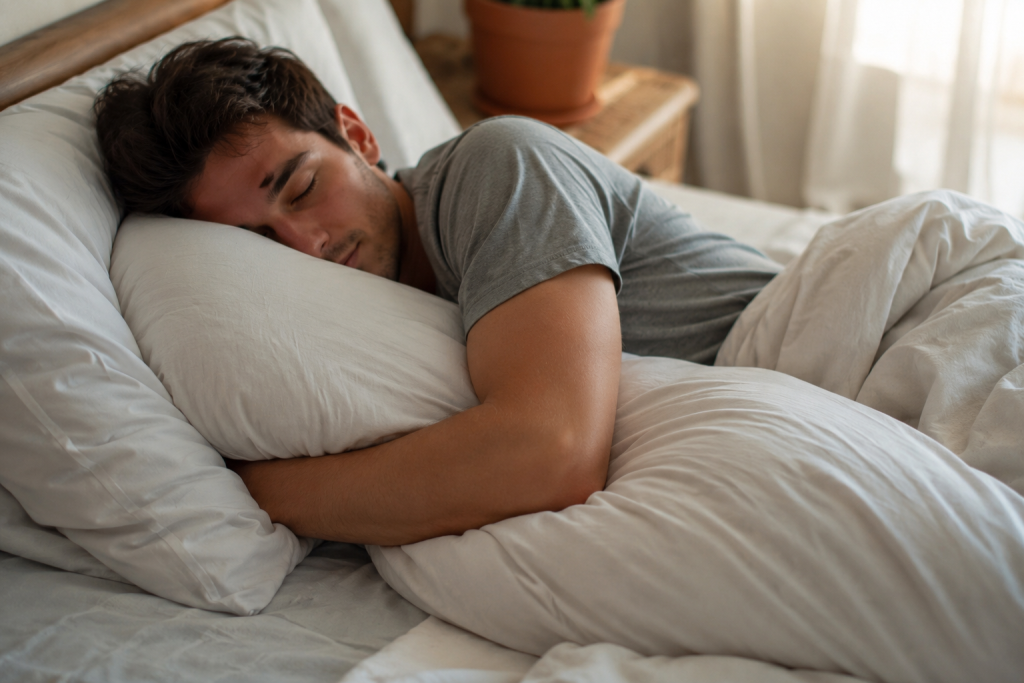
Since back-sleeping was a major trigger for me, switching to side sleeping made a noticeable difference almost immediately. When you sleep on your side, your jaw doesn’t drop backward the same way, and your tongue is less likely to block your airway.
If you’re a chronic back-sleeper (I was), try:
- A body pillow to physically stop yourself from rolling onto your back
- Sleeping in a “starfish” position with arms outstretched, which makes rolling over less comfortable
- An elevated wedge pillow, which keeps your head and upper torso raised and naturally discourages mouth breathing
3. Chin Straps
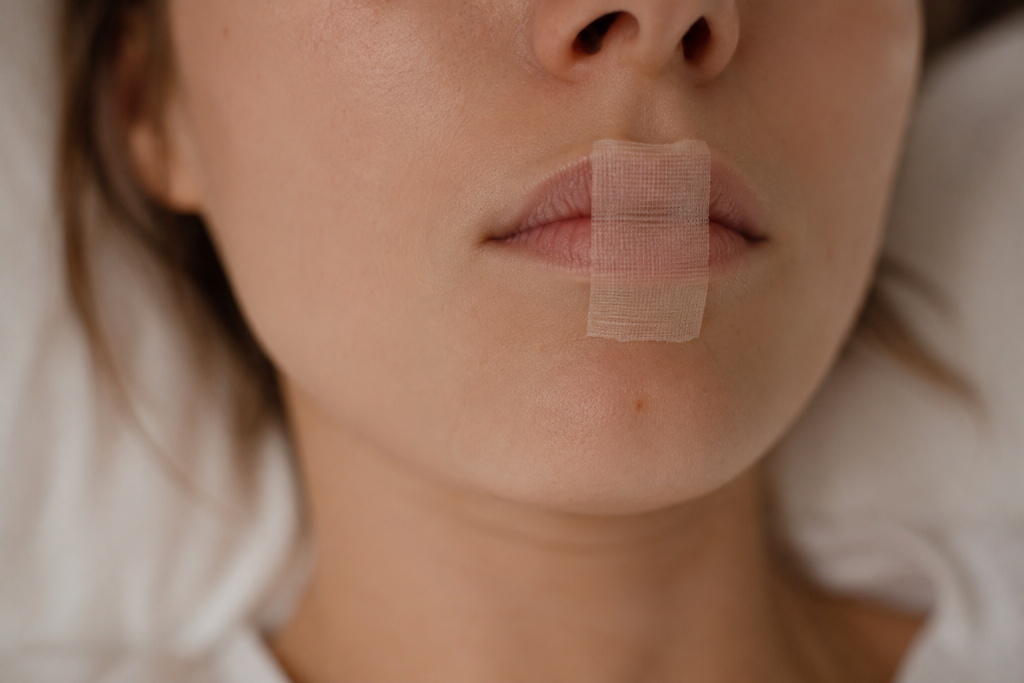
If tape feels too intense, a chin strap is a solid alternative — it wraps under your jaw and over your head to physically hold your mouth shut, rather than just sealing your lips. Some research suggests chin straps may actually work better than tape for certain people, since they close the entire jaw rather than just the lips, which matters a lot for CPAP users trying to prevent air leaks.
4. Treating the Root Congestion
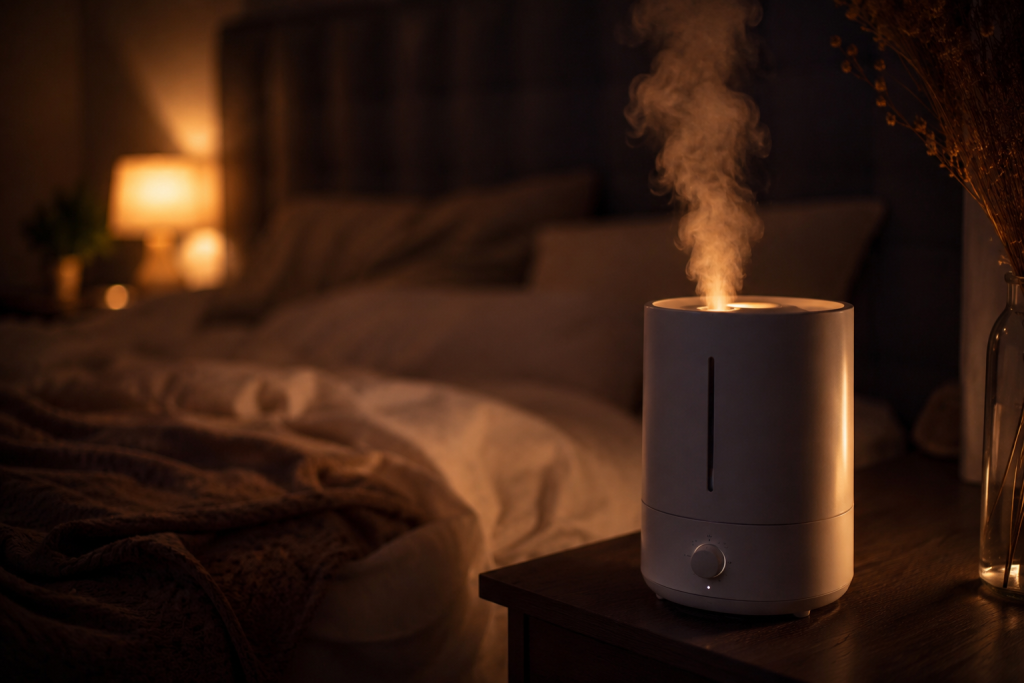
This is the step I skipped at first and shouldn’t have. If your nose is blocked, no amount of tape or straps will fix the actual problem — you’ll just be fighting your own body all night. For me, a daily saline rinse plus addressing seasonal allergies made a bigger difference than any device.
Other nasal-clearing options worth trying:
- Nasal strips (the adhesive kind that sit on the bridge of your nose)
- A humidifier in your bedroom, especially in dry climates
- Staying well-hydrated during the day, since dehydration thickens mucus and worsens congestion
For a deeper walkthrough of pre-bed routines, sleep positioning, and remedies specifically for a blocked nose, check out my complete breakdown on how to sleep with a stuffy nose.
5. Daytime Tongue and Breathing Retraining
This one takes patience but pays off. Practicing nasal breathing during the day — consciously keeping your lips together and your tongue resting on the roof of your mouth — helps retrain the muscle memory your body uses automatically at night. It felt silly at first, but a few weeks in, I noticed I was doing it without thinking.
How to Keep Your Mouth Closed While Sleeping Without Tape
If mouth tape isn’t for you (totally fair — it’s not for everyone), you’re not out of options. The most effective ways to keep your mouth closed while sleeping without tape are:
- A chin strap, which holds the jaw closed without touching your lips directly
- Side sleeping, supported by a body pillow or wedge pillow
- A custom-fitted mouthguard, especially helpful if you also grind your teeth at night
- Treating nasal congestion so your body naturally prefers nose breathing
- Tongue-retaining devices, which gently hold your mouth in a closed position without any adhesive
I personally landed on a combination of side sleeping plus tape most nights, with a chin strap as a backup on nights my allergies were acting up.
When to See a Doctor Instead of DIY-ing It
I want to be upfront about this part, because it’s the part most “quick fix” articles skip. Mouth breathing at night isn’t always just a harmless habit — sometimes it’s your body telling you something’s actually wrong. Talk to a doctor or sleep specialist if:
- You snore loudly and consistently
- You gasp, choke, or stop breathing during sleep (or your partner notices this)
- You’re exhausted during the day no matter how much you sleep
- You wake up with headaches most mornings
- Tape or straps make your breathing feel worse, not better
If any of these apply, don’t just tape your mouth shut and hope for the best — a sleep study can tell you whether something like obstructive sleep apnea is behind it, and that needs real treatment, not a strip of tape.
Frequently Asked Questions
How can I train myself to sleep with my mouth closed? Practice nasal breathing during the day, work on tongue posture (resting your tongue on the roof of your mouth), and address any nasal congestion. Devices like mouth tape or chin straps can help speed up the retraining process at night.
Is it bad to sleep with your mouth open every night? Over time, chronic mouth breathing at night can lead to dry mouth, poor oral hygiene, sore throat, disrupted sleep, and daytime fatigue — and it can sometimes be a sign of an underlying issue like sleep apnea.
What is the fastest way to keep my mouth closed while sleeping? Mouth tape or a chin strap tend to produce the fastest results, but they work best when paired with fixing the root cause — like nasal congestion or back-sleeping — rather than used alone.
Can I keep my mouth closed while sleeping without tape? Yes. Side sleeping, a chin strap, a fitted mouthguard, and treating nasal congestion are all effective ways to reduce mouth breathing at night without using tape at all.
The Bottom Line
Figuring out how to keep my mouth closed while sleeping wasn’t a single fix — it was a combination of understanding why it was happening and then testing a few different tools until I found what worked for my body. If you’re dealing with the same dry-mouth mornings and groggy afternoons I used to have, start with the basics: check your sleep position, address any congestion, and then experiment with tape, straps, or a mouthguard. And if anything about your breathing at night seems more serious than habit — loud snoring, gasping, extreme fatigue — please don’t tough it out. Get it checked out. It’s worth it.